For my piece, I have decided to work alongside Caitlin Cregg to record an acoustic version of my original song, “Phone Call”. The instrument I will be manipulating, is the acoustic guitar. I also aim to record piano to add depth to the piece. I have attached a clip of the original version that I will be recreating below.
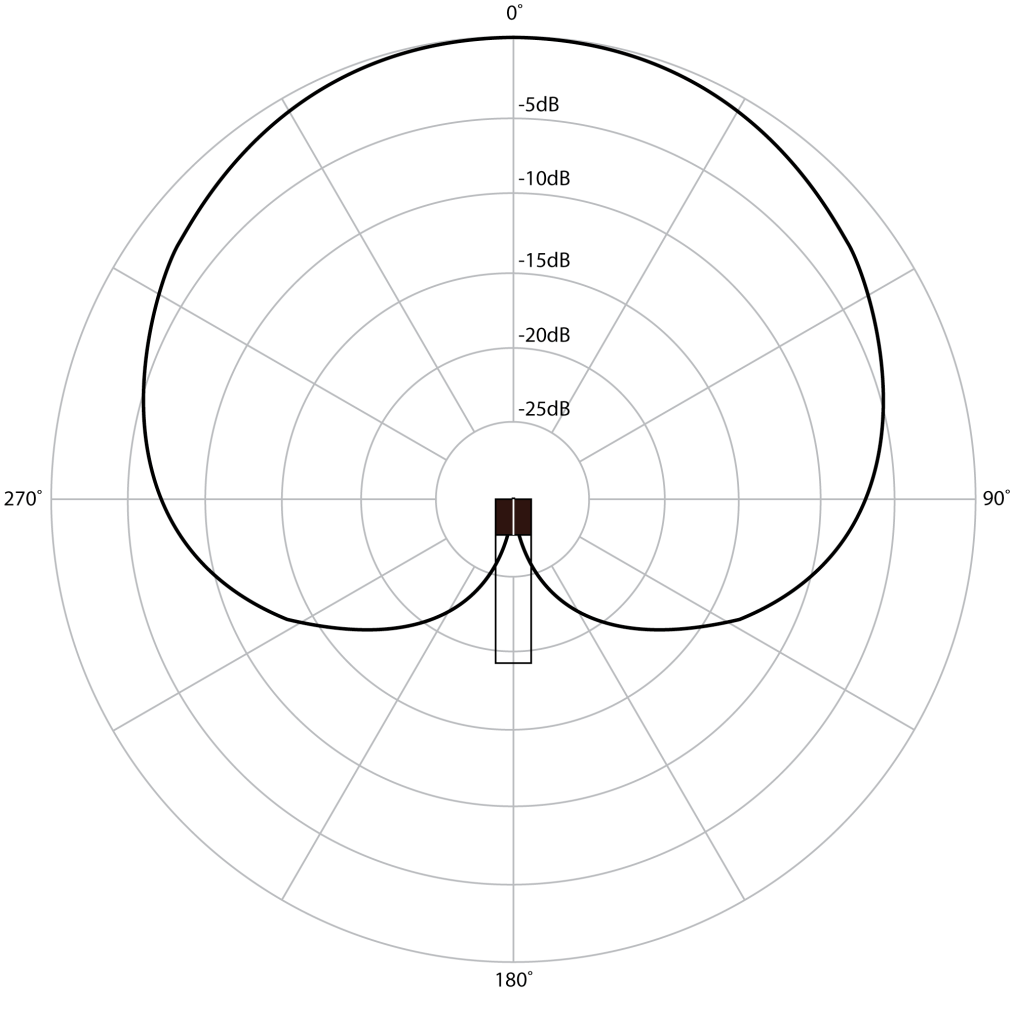
For one version, I plan on using two pencil condenser microphones in a spaced pair placement, positioned at the neck of the guitar, around 6 inches away from the 8th fret and one, again, 6 inches away and pointed at the 12th fret. By using this method, I hope to record the overall tone of the guitar through the mic pointed at the 12th fret and the string resonance through the other. I also positioned the microphones 6 inches away from the guitar as I am a rather quiet player and so have moved the microphones closer in order to match my playing style and hear the guitar to the best of its ability. A strength of using these mics is that they are highly directional due to their cardioid polar pattern; the mic is most sensitive at the front, a little at the sides with a deaf end on the rear – I have attached an image to illustrate this. This is positive for recording guitar as it will record all the tones of the guitar clearly and cleanly with minimal sound being picked up from the rear end.
Most Volume (0dB) Picked Up at the Font of the Mic (0°)
Deaf End at the Rear (180°) of the Mic (-30dB)
A problem I may face with using pencil condenser microphones, is that they are typically much more susceptible to high gain feedback due to their high sensitivity which may lead to background noise being recorded. To combat this, I will be recording in the controlled setting of a recording studio. This will minimise the likelihood of any background noise being picked up as these studios are sound proofed meaning little to no interference. I will also be using three partition boards surrounding the mic set up to further reduce the likelihood of any background noise being picked up. These will also minimise room reverberation which in turn should make the recording sound more professional.
For my second version, I will be using a large diaphragm condenser microphone placed 6 inches away from the sound hole of the guitar as well as two pencil condenser microphones – one pointed at the 8th fret and one located at the bottom of the guitar. By using this placement with these variations in microphones, I aim to get a thicker sound from the large diaphragm condenser as, due to the nature of the mic, it picks up much of the low-end frequencies, pick up string resonance from the 8th fret pencil mic and then a stereo effect from the pencil mic directed at the bottom of the guitar.
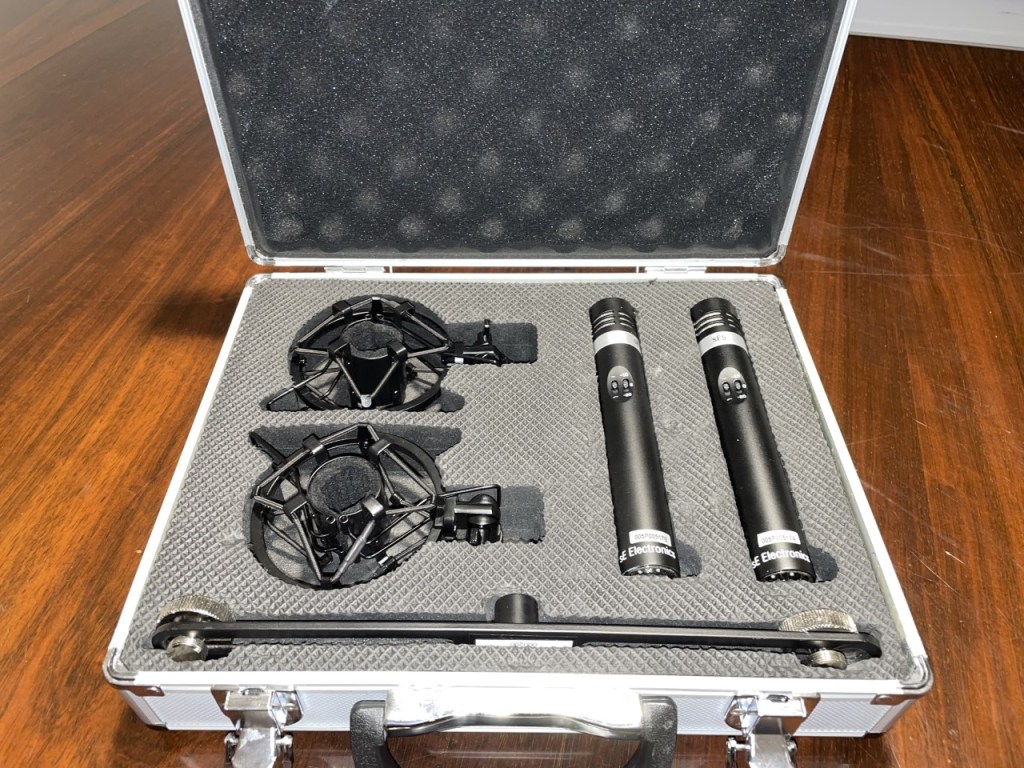
sE5 Matched Pairs
I decided to use the sE5 small diaphragm condenser pencil microphones and the Neumann U87 large diaphragm condenser microphone. The sE5s were a good option for me as they allow stereo recording, making the mixing stage easier later on. The sE5s produce an airy top end, meaning that any sharp, harsh sounding, high frequencies are less likely to cause clipping . They also produce a clean and crisp sound which I knew would be instantly distinguishable from the Neumann.
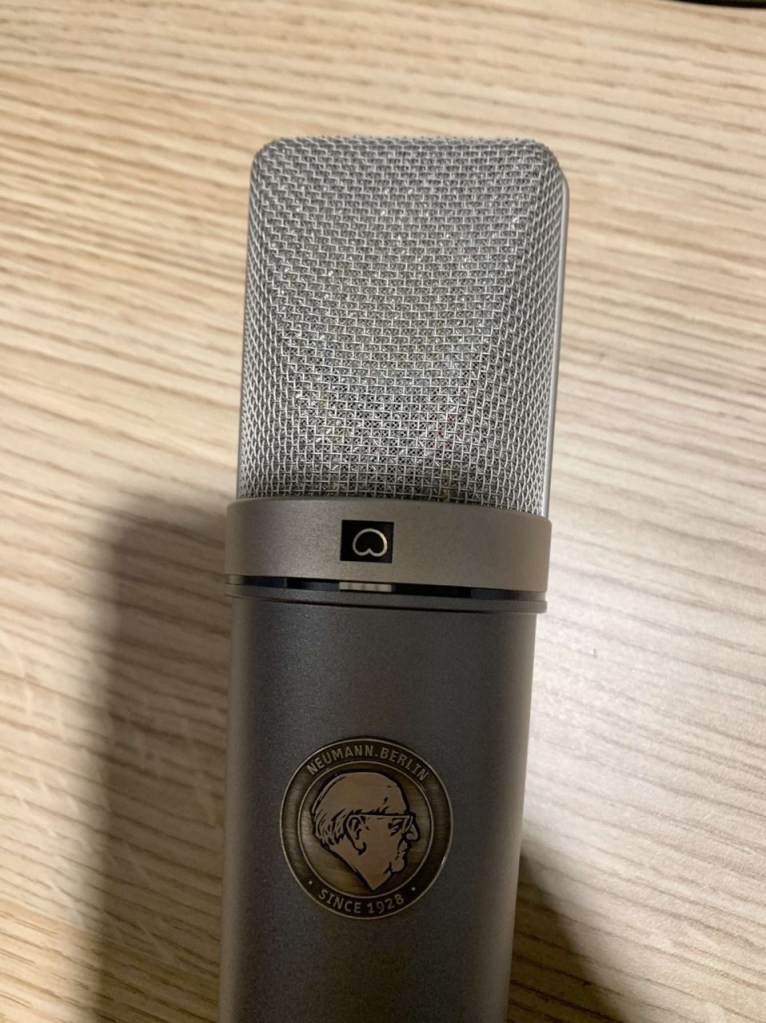
Neumann U87
The Neumann adds depth to my recording. Due to its large diaphragm, this microphone produce a warm and big sound contrasting with the sE5’s and giving the piece more character, tonal range and a greater timbre.
Throughout the course of this blog, I will be reporting on the processes I utilized in order to create a studio recording of my original song. For this assignment, I am required to create and record an original song using only multiple microphone techniques and subtractive EQ. I will be manipulating microphone positions, microphone placements and fader positions in order to create differing tones on a particular instrument. I will be releasing two versions of the same song in order to illustrate clearly the effect on tone.
A and R, or Artist and Repertoire, is the way in which officials of commercial recording companies selectperformers and supervise the production of their recordings, Wikipedia . Throughout the course of this report I will act as an A and R agent and will be discussing the new, unsigned talents emerging from the varied genres of Pop/Rock, West Coast Rap and Avant-Garde Jazz and. I will explain the A and R techniques I used in order to find said artists and what I find particularly interesting and exciting about them. Due to circumstances surrounding the COVID-19 outbreak, I will not be able to construct one of the main A and R techniques of going to gigs and finding talent via shows. Consequently, I will be focusing mainly, on the variety of digital on-line tools I used in order to find these artists from home.
Pop/Rock
Pop/Rock is a style of music originating in the 1950s. It is a distinct genre field influenced by the beat and arrangements of Rock and Roll. However, the primary focus of the genre is to emphasise song writing and recording as a craft as opposed to Rock and Roll, which emphasises attitude (Hamelman, 2004). Pop/Rock was seen as a “softer” alternative to Rock and Roll making it easier to listen to. Consequently, it has a broader, more extensive audience that listen to it regularly, increasing its popularity. Furthermore, the fact that the “Rock and Roll craze began to die down” in the late 50s – according to the online music resource All Music (2020)- meant that genres, like pop/rock, had a huge lack of competition due to its biggest opponents no longer dominating the market. This contributed to the success of pop/rock and ultimately its rapid increase in popularity in the early to mid 60s. Artists such as Paul McCartney, Fleetwood Mac and the Beach Boys further strengthened this rise by simply adapted to the change in genre and putting out music fitting to it. The main genres that inspired Pop/Rock are, of course, Popular music and Rock and Roll. Despite having very different styles and aims, the two have one common denominator, their target audience. Both genres seem to be idolised by the younger generation. For instance, the term teenager was rarely used until the rise of Rock and Roll in order to describe the rebellious youth. Moreover, since the mid 50s, Pop has been used as a term to describe a distinct, youth centric genre further strengthening its focus on the younger generations.
Little Brother Eli:
Following:
Instagram: 1383
Twitter: 2430
Facebook: 3807
Spotify: 1062 monthly listeners
Sounds similar to: Metronomy, Alt – J, Fall Out Boy, Olly Murs
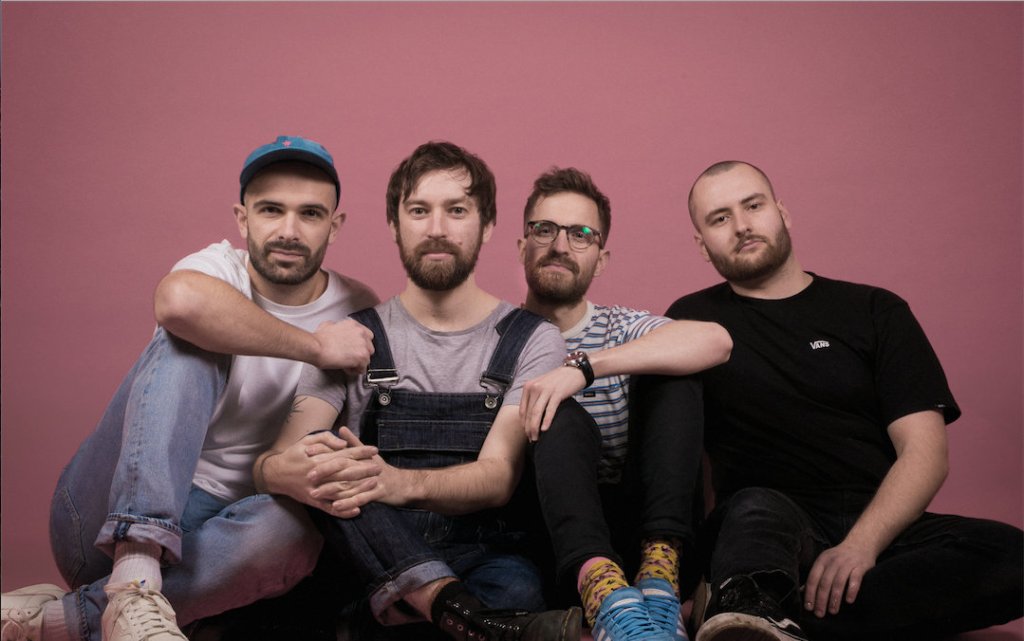
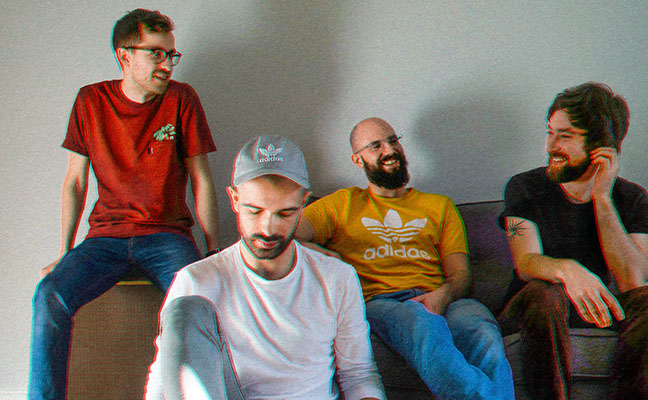
The first unsigned band I will be discussing is the up and coming group “Little Brother Eli”, a four-piece indie, pop/rock band from Oxford. I first came across the band through the social media platform, Twitter (2006). I simply searched “unsigned pop/rock bands” and, after some searching, I saw them advertising their single “Love Between Teens”. Similar to 2015, when remixes and club music began to take over popular artists like Katy Perry and Selena Gomez, the track made me feel as though it was reframing the concept of pop music as we know it today. I felt so unbelievably excited about the prospect of a changing popular in a time where it has been the same recycled beat for over 5 years now. Fair to say I, and everyone else, is ready for something different, and I strongly believe that the catalyst for this change is Little Brother Eli. Their music felt as though it would be liked universally. However, I was strangely disappointed. Disappointed at the fact that the group wasn’t more known, as I was unable to discuss them with others. I couldn’t help myself but to message everyone I knew immediately, telling each of them to listen in order to see if they felt the same as me.
The most exciting thing about Little Brother Eli, in my opinion, is the sheer diversity and versatility of the group in terms of their sound. In many ways, the band is almost genre-fluid. For instance, in 2015 the group made, primarily, rock singles such as “Dreams” that sound greatly inspired by idolised bands such as “Linkin Park”. However, flash forward to today and you wouldn’t believe it was the same band. With songs like “Love Between Teens” and “Oops” which I can only describe as being “radio friendly” and “pop centric”. Regardless of this, it can be said that whatever phase the band is in, the music they put out has been nothing short of genius.
Furthermore, with their versatility also comes universality. Due to the range of genres their music fits into, they’re likely to have a very broad audience of people. This encompasses people who enjoy Rock and roll, Indie or Pop. This is an exciting trait for the band to have as it means that they will have fans in some of the biggest, most popular music genres at the minute, further increasing the bands reach. In a broader sense, their music could help people connect with others who they may have never met if not for their common trait of liking Little Brother Eli.
Finally, the band has been putting out these great tracks since 2015. From this, I can gather that the band knows a lot about the industry and what they want from it. This also implies that they will be very easy to work alongside of as they already know what they’re working towards. The band has also managed to gain 1,168 monthly listeners on Spotify without any outside help, just through their art. The prospect of what the band could be with the right label is exciting to think about.
West Coast Rap
According to Wikipedia (2019), West Coast Rap is a regional variation of hip hop/rap that encompasses artists and rappers originating from the west coast of the United States of America. The genre started dominating the radio as well as record sales around the early to mid 1990s, although its origins date back to late 1970s. This was when Alonzo Williams and Rodger Clayton began their partnership. It is said that the main catalyst for West Coast Rap stems from the 1965 “Watts Riots”, in which 34 people were killed and another 1,032 injured in the Watts neighbourhood of Los Angeles. According to history.com (2017), the residents believed that the police were abusing African American persons, causing a massive riot. This is relevant as, after this, Bud Schulberg founded the “Watts Writers Workshop” which aimed to provide the people of Watts a safe place to express themselves. From this, the “Watts Prophets” formed – a group of musicians that helped drive the west coast rap scene.
Key artists that I believe helped make West Coast Rap popular include; Tupac Shakur, Dr Dre and Snoop Dogg. However, I believe that the artists keeping it popular today include, Kendrick Lamar, Eminem AKA Marshall Mathers and Tyler the Creator. What’s interesting about these artists, and I believe West Coast Rap as a whole, is that they all have very different styles, despite being from the same genre. For example, Kendrick Lamar makes intellectual and political music, whereas Tyler the Creator is liked for his strange characters he creates in his music and stories that he creates via these characters. Eminem, however, is known recently for his diss-tracks whereas, when he was first starting out, he was idolised for his accounts of his real life that he turned into music. This illustrates the unrestricted nature that encompasses the West Coast Rap scene.
Mars Valley
Following:
Instagram: Inapplicable
Twitter: 31k
Facebook: Inapplicable
Soundcloud: 451
Sounds similar to: Tupac, Nelly, R Kelly, Snoop Dogg
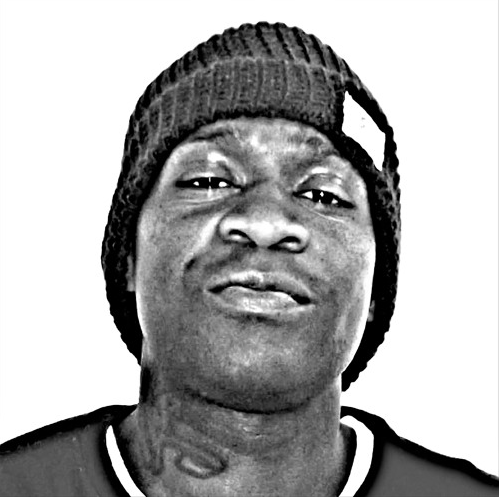
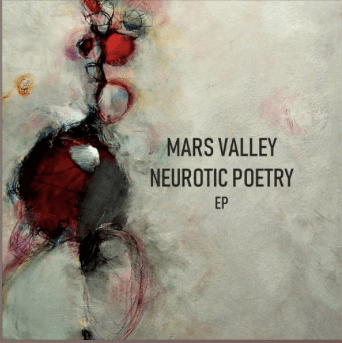
In terms of unsigned talent from this genre, I will be talking about the artist “Mars Valley”. Valley is a mysterious rapper in that there is not really any information about him, not even his name. In fact, the only forms of media I have found of his are his Twitter and Soundcloud. I found Valley through the site Unsigned.com (2006) in which you put a genre and a location into a generator. This provides a number of talents based on these requirements. Mars was one of the artists suggested to me and so I gave his music a listen.
The first thing noticeable to me was the lyrics. He talks a lot on politics, love, loss and mental health in ways that many people will be able to relate to and understand. For instance, in the track “Bully” he raps about life growing up and describes how he is “trying to reach middle age if [he’s] lucky” and later explains how he is bothered by how America calls itself, “land of the free”. I have provided these snippets of the track below.
The way in which I perceived the track, is in relation to him being an African American living in these times of severe prejudice in the justice system of America, towards ethnic minorities. To me, it implies that he is fearful of being an African American man, in a time where black people are still being jailed or killed unjustly. I strongly believe that Valleys’ music will actually make a difference. Whether that be in making young minority groups feel less alone in their fear or giving people who may never have felt this, an indication of what it is like for people to live in fear and so, hopefully, encourage a change in behaviour.
It is also apparent that Mars Valley is greatly inspired by other west coast icons such as Tupac. However, what I believe is really exciting about Mars is that he takes inspirations from different genres, rather than other artists in the same field. For example, his song “Vacant” takes the rap style of Tupac whilst also using an intense electronic synth as the basis. He then includes a very 2000, Nelly style chorus. All these components seem as if they would not go together or merge well at all, yet somehow, he makes it work. I believe that he is pairing sounds together that nobody else would even bother trying. In my opinion, this is due to him taking inspiration from many different sectors of music and so has been able to manipulate them, creating something completely original to him, picking and choosing whatever he likes from other genres and making it work.
Over the past few years, I feel as though the style of West Coast Rap has changed drastically. For example, many popular west coast rappers have detached from what the genre started out to be, expressing emotion and using music almost like a diary to vent. I believe that Mars Valley is bringing back the origins of west coast rap and has the ability to make the old school style popular again. The majority of West Coast rap today, is focused on a catchy, 808 heavy beats, at the expense of clever lyrics. This contradicts with what Bud Schulberg wanted for the genre, in being to express feelings and emotions through words. I believe that Mars truly is channelling what was truly intended for the genre whilst also incorporating the modern day style, which will be important in weaning current fans onto lyrically based tracks. In short, he is revitalising the vintage, original rap scene whilst also keeping the new “modified” fan base in mind.
All and all I believe that there is a huge gap in the market for artists such as Mars Valley that truly does need to be exploited.
Avant Garde Jazz
Avant Garde jazz, also known as experimental jazz, is a combination of Avant Garde art/music combined with jazz with a high focus on improvisation (Wikipedia, 2020). It originated in the 1950s and was developed in the 1960s by artists that rejected the conventions of bebop and post bop. Many who pushed Avant-garde jazz wanted to blur the line between the structured and spontaneous when it came to song composition. What I believe people like about the genre is that it breaks the “rules” that many have created for music over the years as a consequence of music theory. It allows people to express themselves freely without judgement or restrictions. They can simply do, whatever they want. Many listeners enjoy this, as they know that what the artist is performing what they believe is correct and doing it for themselves, straight from the heart, as opposed to being formulated and fabricated for the sole reason of making money, which most popular music is nowadays. Artists that I believed increased the popularity of Avant-Garde Jazz, include Alice and John Coltrane, Cecil Taylor and Charles Mingus.
Thought Gang:
Following:
Instagram: Not Applicable
Twitter: Not Applicable
Facebook: Not Applicable
Spotify: 11,529 monthly listeners.
Sounds similar to: Jaimie Branch, David Lynch
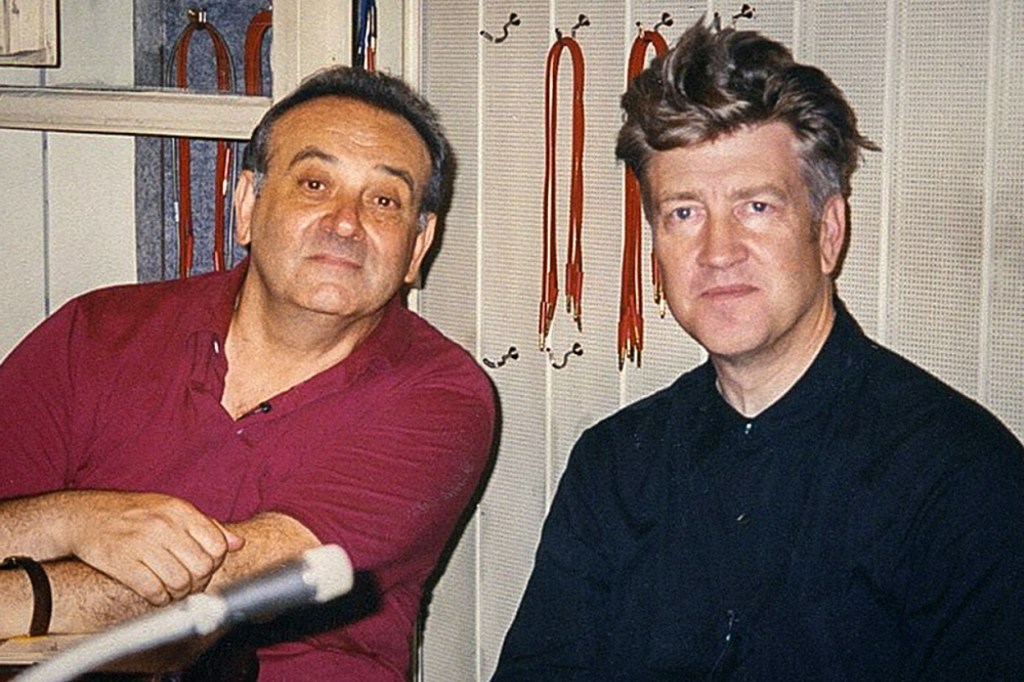
The new emerging talent I would like to discuss for this genre is the Jazz duo, Angelo Badalamenti and David Lynch, better known as “Thought Gang”. I first came across the pair whilst searching for the newest Avant Garde Jazz album releases, in order to see who is current in the genre, with it being a musical field that I am not particularly familiar on. I found myself on the website for “album of the year”, discovering that the duo had been voted for the best Avant Garde Jazz album of 2018 with their debut record, “Thought Gang”. Naturally, I wanted to see if the claims were true. I had listened to a number of different Avant Garde artists prior to the duo and hadn’t really understood the why it was so popular. However, with Thought Gang, I seemed to understand just what they were trying to do. I understood why the music wanted to make me feel uncomfortable, confused, happy or sad. Its as if your body and mind are under complete control of the music and composer. They steer you towards the emotions that they want you to feel, you can no longer decide upon them. I began to fully understand the aim of the genre as a collective and other artists as a consequence seemed to make sense. I began to enjoy the uncomfortable nature of the music as I knew it was for a reason, but yet always left in the dark as to what that reason was. Due to this, I believe that “Thought Gang” if vital in the rejuvenation of Avant Garde Jazz as it simply teaches people how to enjoy the weirdness of the genre as opposed to rejecting it.
Furthermore, “Thought Gang” uses instruments and effects ordinarily seen in stereotypical Avant Garde jazz. For example, in their song “One Dog Bark” they use a high amount of distortion on the guitar parts as well as a drum beat centred around the snare. This is typically used in a lot of Rock records as opposed to Jazz as Jazz is thought to be more mellow and so doesn’t often us a lot of high frequency, high attack snares. This is exciting to me as the duo is changing and evolving Avant Garde Jazz as we know it and is not afraid to make people feel negative emotions from their music which jazz previously aimed to help the listener escape from. Moreover, many people in today’s society prefer rock music over Avant-Garde Jazz, and so consequently enjoy the high distortion and drum heavy beat. Due to this, I believe that Thought Gang is great transition band into the world Avant Garde Jazz as it is not too dissimilar to what people enjoy listening to today. This will then make people want to invest more time listening to more Avant Garde Jazz and distinguish what they do and don’t like when it comes to the genre.
16/12/19 – For today, I recorded the sound of the monsters hands and the blood trickling in the bathtub as well as various sounds made by the main male character . In order to mimic the monsters hands, I used a bunch of celery and , similarly to the lettuce, I twisted it excessively but slowly. This created a deep crunching and breaking sound as well as some higher frequencies of squeaks as the celery rubbed against one another. For the sound of trickling blood, I used a glass of water and slowly poured it into a ceramic sink in order to replicate the sound of the ceramic bathtub. In terms of recreating the sounds produced by the main male character, I needed to replicate his breathing, sliding down a wall and footsteps. Firstly, for the breathing I simply recorded myself breathing at the same times as the character. I then pitched the recording down in order to mimic his deeper voice. To record the sliding down the wall I also slid down a wall at the same pace as the character. For the steps I recorded myself pushing my hands down onto a wooden table and slightly rolling them in order to replicate how a foot would walk. This was so that the sounds created were quieter and thus represented how the character was walking better. This concluded all of the sounds we needed to replicate for our project. All audio negated from the blogs that is in the project is audio that is created from doing exactly the same thing that is shown in the clip e.g, breathing.
15/12/19 – Today I aimed to record the following; Synths for background music, a bannister creak, creaking floorboards and a wooden box opening. For the synths I used a midi keyboard on logic pro and used a pre set with a lot of arpeggio and played a simple riff on the low C bass notes. I then bounced this out as a MP3 file and imported it onto the pro tools project and looped it across the entire piece to add a scary ambience to the piece. For the creaky bannister and floorboards, I twisted a wet lettuce in multiple directions creating a high pitch cracking sound. To differentiate the bannister and floorboard sound, I pitch shifted the bannister one lower in order to recreate it more accurately. In terms of the box opening, I used the Sennheiser mini boom microphone’s case and closed it slowly.
03/12/19 – Today, we planned on recording the hand hitting the shower door as well as the breaths of the characters. To recreate the breaths, we simply breathed along with the visual in order to get the right timings. In order to create the sound of the main character hitting the shower door, I recorded myself smacking the glass of a door, creating a deep, forceful sound much like in the clip. I then put the audio into Pro Tools and added a hall reverb along with a large echo in order to mimic the effects used in the film. I also pitched the audio down by a 2nd degree giving it a more sinister aura.
23/11/19 – The aim for today was to record the sounds for the firework the drums for the backing track. In order to replicate the firework, I used a inflated balloon and pinched the neck whilst pulling the sides horizontally away from one another. This created a high pitched, screech like sound thus creating the desired effect. However, through this method we could not replicate the pitch bend made from a firework, only a monotonous high-pitched noise. We then decided that in order to get the effect we were looking for we would have to set off a real firework in a confined space in order to get good audio and concluded that it would be too dangerous. Consequently, I used audio from another source. To recreate the drum beat for the backing track, I recorded mainly low and high toms as well as the kick. This was similar to the original recording however it needed to be deeper, similar to a tribal beat. In order to achieve this, we decided to flip the drum sticks around so the more dense handle was striking the toms and thus created the desired effect.
21/11/19 – For the dialog recording we had to record an interview with a music artist, asking them questions whilst focusing on sound as well as picture quality. This involved checking levels on mics and making sure that they were positioned correctly with the aim of creating a clean and high quality sound. For this interview we used the equipment as follows; x2 Sennheiser Shotgun Microphones, a Roland R-44. For this assignment, a member of our group, George Fitton, played the role of interviewer for, Sam Clynch – the guitarist for the grunge band “Character Development”. We decided to split the work load evenly between all members of the group, therefore, I was in control of the audio recording which, involved changing gain and volume levels ensuring that the sound didn’t clip, manoeuvring the microphones depending on the movements of the interviewer and interviewee as well as monitoring background noise. Jack was in charge of the camera which included making sure both the interviewer and interviewee were in shot. Finally, George Fitton was the interviewer. This involved writing and asking the questions he wanted Sam to answer. In order to get the least background noise and chatter, we decided to film this interview in the recording studio of the Creative Edge building. Not only did this have little interference in terms of background chatter, but it also had low reverb levels meaning that there was limited reflection of the walls which could in turn lead into poorer sound quality.
After this, we then exported both the audio from the Roland R-44 and the camera into a pro tools project and synched up both microphones to the picture. This was relatively straight forward, however, one microphone had recorded the interview at a slighter louder rate. This meant that the interviewer sounded louder than the interviewee. We then corrected this in the editing stage by lowering the gain level of Georges mic.
07/11/19 – I began the second day of recording my audio today. However, due to the weather, we were limited in what we could record. This is because the high winds as well as rain would damage the diaphragm inside the mic. Nonetheless, I recreated the background ambience of the scene by recording the sound of the wind going through trees as well as the rustling of leaves on the ground. I then wanted to recreate the noise of the characters running on the dead leaves. For this, I went to a highly vegetated part of campus and began recording myself walking. Similarly to the problems previously faced, the female XLR to ¼ cable was too short to record all the steps needed. Again, I will chop and repeat them in time with the characters footsteps. Retrospectively, I would have simply stayed in the same place and walked on the spot in time with the characters, saving copious amounts of time during the editing stage of the assignment.
04/11/19 – Today was the first day of recording. We aimed to recreate the following sounds; A fuse burning, a lighter strike and footsteps on sand. I started by shaking a fizzy drink vigorously. I then slowly removed the cap of the bottle and used the Sennheiser Mini Boom Mic to record the noise made. This is because this is a shotgun microphone meaning that it is highly directional and so is ideal for recording our clips. The problem with this recording, however, is that we also could not avoid recording the noise of the bottle cap being removed or the slight talking being picked up at the end of the recording. To combat this, I have decided to cut out the first few seconds of the recording in which the cap of the bottle is removed and the end portion of the clip. I also incorporated a fade at both the start and end of the clip, resulting in the sound of a fuse burning. I then decided to record the noise for the lighter strike by simply recording the sound of a Clipper lighter striking in time with the visual scene. Lastly, I recorded a different takes of walking on the sand at Edge Hill’s Beach. This would recreate the noise of the characters walking on sand. The problems faced when recording this, however, was the fact that the female XLR to ¼ inch cable attaching the microphone to the field recorder was too short limiting the distance I could walk and thus steps I could record. To combat this I tried getting someone to walk alongside me whilst recording. However, this presented another issue in that it was also recording footsteps from the person recording. Finally, I decided that I was going to use the few steps I had and edit them together in pro tools in order to match the steps taken in the scene.

 Sarahs Sound Dubbing Blog