17/11/2021
For my piece, I have decided to work alongside Caitlin Cregg to record an acoustic version of my original song, “Phone Call”. The instrument I will be manipulating, is the acoustic guitar. I also aim to record piano to add depth to the piece. I have attached a clip of the original version that I will be recreating below.
For one version, I plan on using two pencil condenser microphones in a spaced pair placement, positioned at the neck of the guitar, around 6 inches away from the 8th fret and one, again, 6 inches away and pointed at the 12th fret. By using this method, I hope to record the overall tone of the guitar through the mic pointed at the 12th fret and the string resonance through the other. I also positioned the microphones 6 inches away from the guitar as I am a rather quiet player and so have moved the microphones closer in order to match my playing style and hear the guitar to the best of its ability. A strength of using these mics is that they are highly directional due to their cardioid polar pattern; the mic is most sensitive at the front, a little at the sides with a deaf end on the rear – I have attached an image to illustrate this. This is positive for recording guitar as it will record all the tones of the guitar clearly and cleanly with minimal sound being picked up from the rear end.
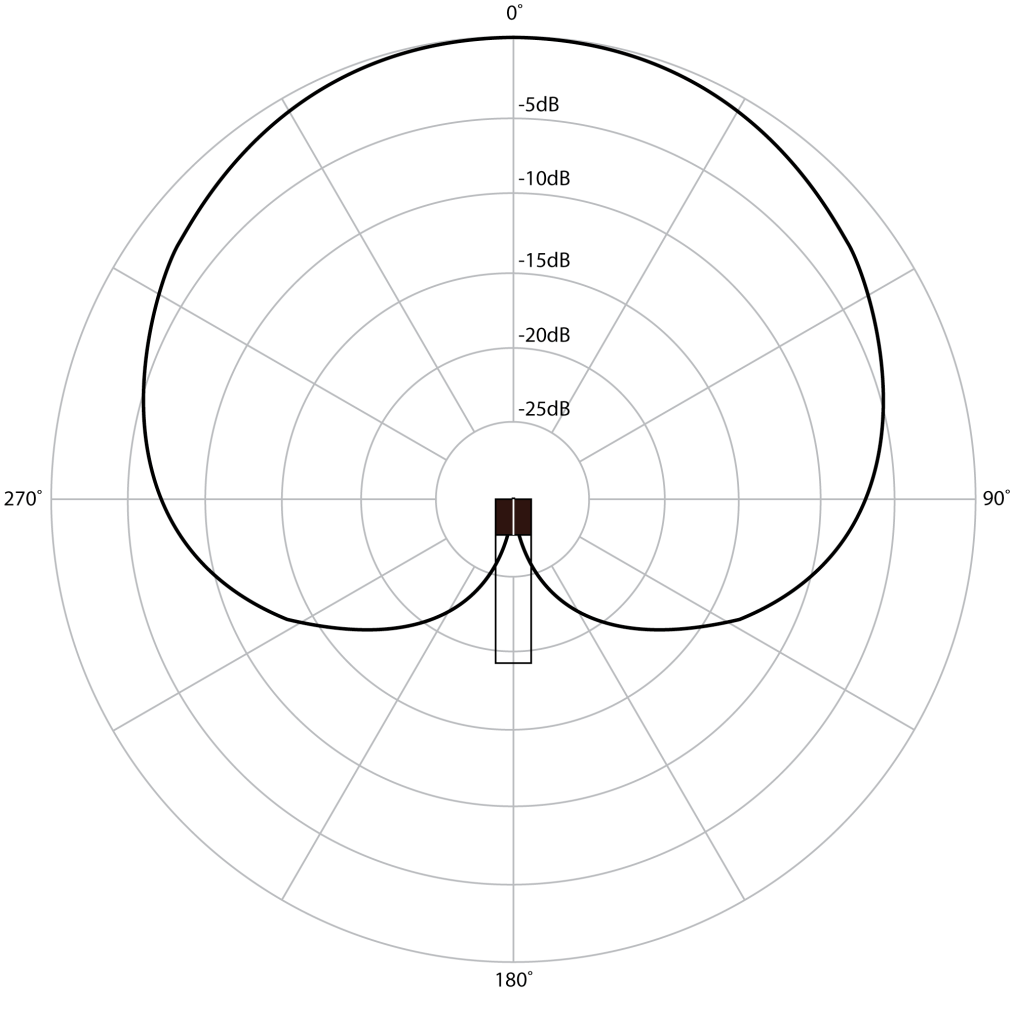
Most Volume (0dB) Picked Up at the Font of the Mic (0°)
Deaf End at the Rear (180°) of the Mic (-30dB)
A problem I may face with using pencil condenser microphones, is that they are typically much more susceptible to high gain feedback due to their high sensitivity which may lead to background noise being recorded. To combat this, I will be recording in the controlled setting of a recording studio. This will minimise the likelihood of any background noise being picked up as these studios are sound proofed meaning little to no interference. I will also be using three partition boards surrounding the mic set up to further reduce the likelihood of any background noise being picked up. These will also minimise room reverberation which in turn should make the recording sound more professional.
For my second version, I will be using a large diaphragm condenser microphone placed 6 inches away from the sound hole of the guitar as well as two pencil condenser microphones – one pointed at the 8th fret and one located at the bottom of the guitar. By using this placement with these variations in microphones, I aim to get a thicker sound from the large diaphragm condenser as, due to the nature of the mic, it picks up much of the low-end frequencies, pick up string resonance from the 8th fret pencil mic and then a stereo effect from the pencil mic directed at the bottom of the guitar.
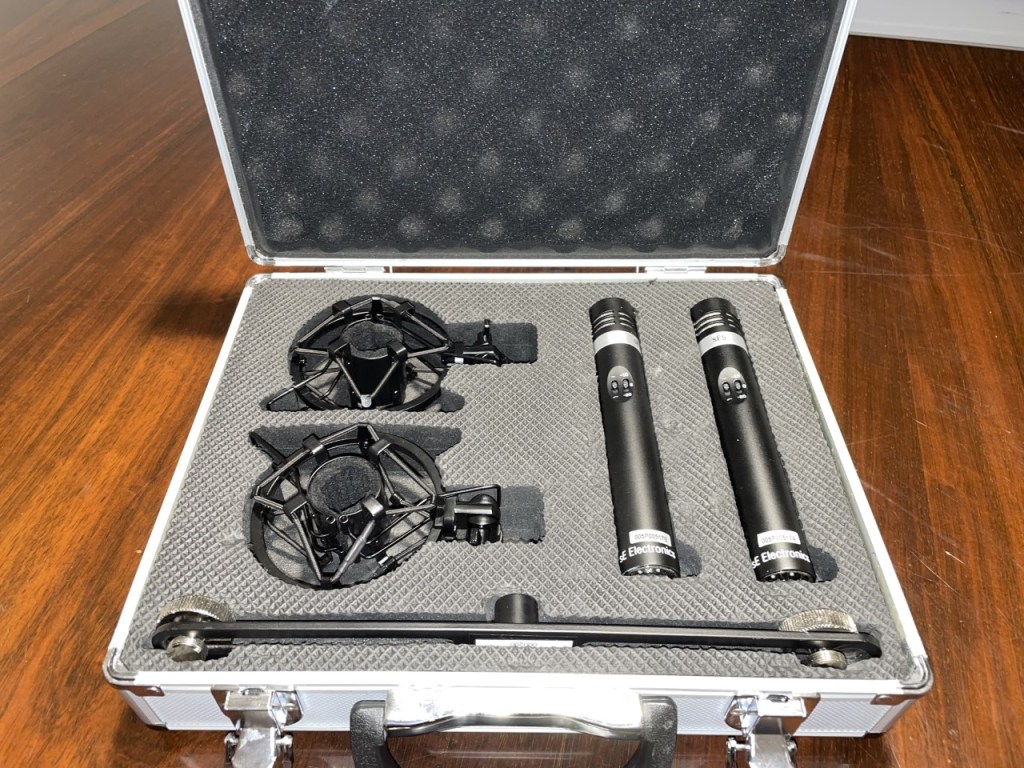
I decided to use the sE5 small diaphragm condenser pencil microphones and the Neumann U87 large diaphragm condenser microphone. The sE5s were a good option for me as they allow stereo recording, making the mixing stage easier later on. The sE5s produce an airy top end, meaning that any sharp, harsh sounding, high frequencies are less likely to cause clipping . They also produce a clean and crisp sound which I knew would be instantly distinguishable from the Neumann.
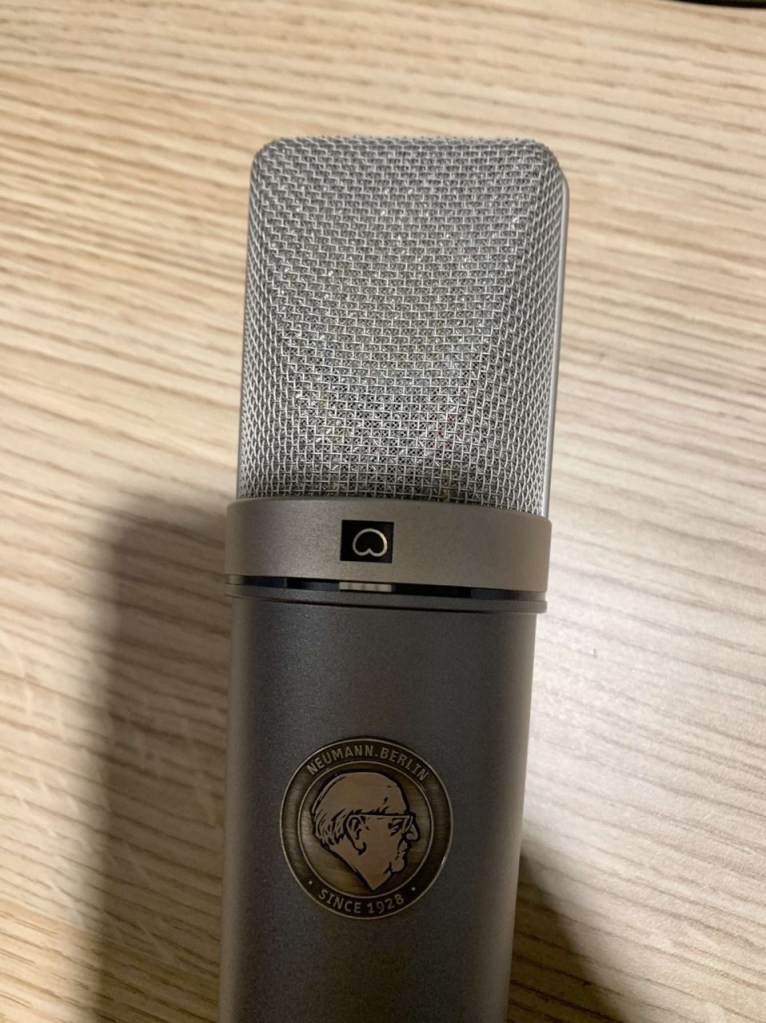
The Neumann adds depth to my recording. Due to its large diaphragm, this microphone produce a warm and big sound contrasting with the sE5’s and giving the piece more character, tonal range and a greater timbre.
 Sarahs Sound Dubbing Blog